


Hirschsprung disease: Occurs when the baby is born without enough nerve cells.
Hirschsprung disease is when a baby is born with intestines that can't move stool out of the baby. The intestine is missing in its nerve cells, called ganglion cells. Which keeps the intestine from working normally. Hirschsprung disease is fairly common, affecting about 1 in 5,000, and is more commo

In Hirschsprung disease, the ganglion cells don't migrate down all the way, leaving an area without any ganglion cells, which is called an
Hirschsprung disease is when a baby is born with intestines that can't move stool out of the baby. The intestine is missing in its nerve cells, called ganglion cells. Which keeps the intestine from working normally. Hirschsprung disease is fairly common, affecting about 1 in 5,000, and is more common in boys than girls.
About 20% of cases occur within families, so it may be genetic. These ganglion cells trigger a series of contractions and expansions called "Peristalsis", that helps move food through the intestines.
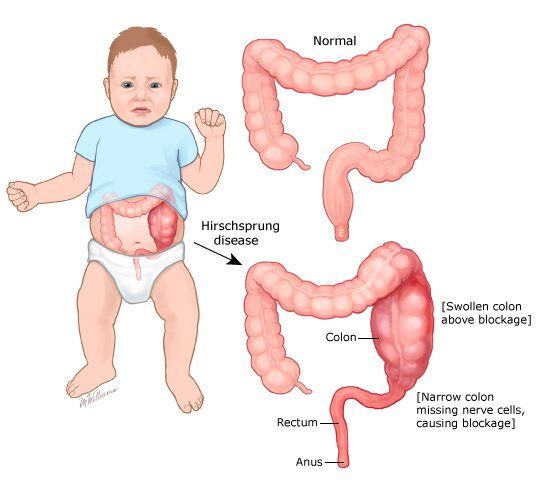
In Hirschsprung disease, the ganglion cells don't migrate down all the way, leaving an area without any ganglion cells, which is called an "aganglionic" area. This has two effects: First, the aganglionic area, and the anal canal, are unable to relax.
That they are much stronger than they should be and they create a high amount of pressure. Second, the peristalsis in the healthy area can't overcome this pressure to move stool out of the body. Usually, this only affects the lower and end of the colon. In rare cases, it can affect the whole colon, or in extreme cases, even the small intestine.
After the baby is born, the stool starts to build up, and the stomach may become very large. The colon responds by becoming swollen and painful, which is called "colitis". The most effective way to treat colitis is by ''colorectal irrigation'', which clears the colon but out with water.
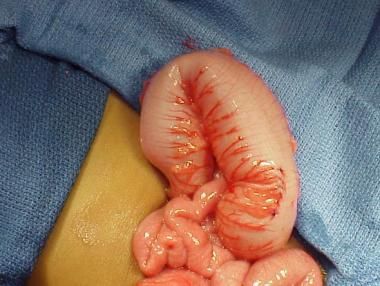
Symptoms of this cycle Include:
Decreased peristalsis, an enlarged abdomen, liquid stool, fever, dehydration, abdominal pain, nausea, vomiting, and stunted growth.
Disclaimer: The opinions expressed within this article are the personal opinions of the author. The facts and opinions appearing in the article do not reflect the views of 25hrNews and 25hrNews does not assume any responsibility or liability for the same.




 (+91) 8081113111
 pr@25hrnews.com